

One of the biggest mistakes ecommerce businesses make is underestimating Shopify development costs.
Most business owners think:
“I just need a Shopify website.”
But ecommerce development is not just website creation anymore.
A modern Shopify store involves:
- conversion optimization
- mobile UX
- automation
- analytics
- SEO
- integrations
- speed optimization
- customer retention systems
That is why Shopify pricing varies massively between developers, freelancers, and agencies.
At SterlingWeb Growth Labs, we regularly see businesses rebuilding stores because they originally hired based only on low pricing instead of long-term business performance.
Cheap Shopify development often becomes the most expensive option later.
This guide breaks down the real Shopify development costs in 2026 and explains where businesses usually waste money.
How Much Does Shopify Development Actually Cost?
There is no universal Shopify pricing because project complexity changes everything.
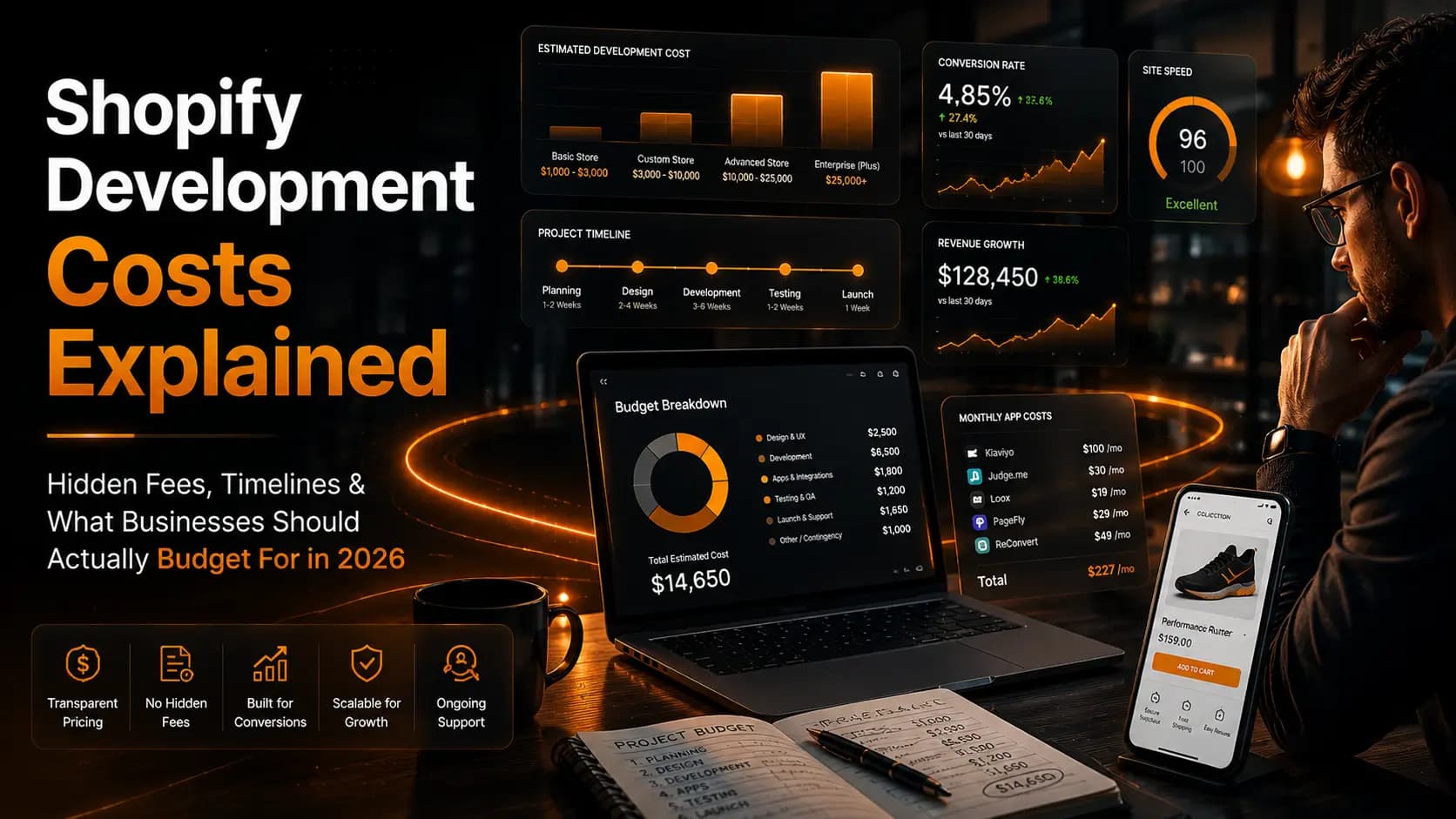
Typical Shopify Pricing in 2026
| Project Type | Estimated Cost |
|---|---|
| Basic Theme Setup | $500–$2,000 |
| Customized Shopify Store | $3,000–$10,000 |
| High-Converting Ecommerce Store | $10,000–$25,000 |
| Shopify Plus / Enterprise | $25,000–$100,000+ |
Businesses comparing only numbers without understanding deliverables usually make bad decisions.
A $1,000 store and a $15,000 store are completely different products.
One is setup work.
The other is ecommerce infrastructure built for scaling.
Freelancer vs Agency Pricing
Shopify Freelancer Pricing
Freelancers usually charge:
- $15–$40/hour for beginner to mid-level
- $50–$150+/hour for experienced Shopify specialists
Freelancers are useful for:
- quick edits
- small tasks
- bug fixes
- short-term projects
But many freelancers struggle with:
- CRO strategy
- advanced integrations
- scaling systems
- long-term support
- performance optimization
Shopify Agency Pricing
Professional Shopify agencies cost more because they provide:
- strategy
- UX design
- CRO optimization
- developers
- SEO specialists
- QA testing
- automation setup
- long-term scaling support
At SterlingWeb Growth Labs, Shopify projects are approached from a growth perspective instead of just visual design.
That means stores are built around:
- conversions
- performance
- scalability
- customer experience
- retention
Not just appearance.
The Biggest Hidden Shopify Costs
Most ecommerce businesses only calculate “website cost.”
That is a major mistake.
Hidden Costs Most Businesses Ignore
1. Shopify Apps
Many stores rely on:
- upsell apps
- review apps
- email systems
- subscriptions
- loyalty programs
- automation tools
Monthly app costs can easily become:
- $100/month
- $300/month
- $1,000+/month for advanced stores
Bad developers install too many apps instead of building optimized systems.
That slows stores and increases operational costs.
2. Premium Themes
Premium Shopify themes usually cost:
- $200–$500+
Custom themes cost more initially but often perform better long term.
3. CRO Optimization
Most stores launch without proper conversion optimization.
Later businesses pay extra for:
- product page optimization
- cart optimization
- mobile UX improvements
- A/B testing
- checkout improvements
Stores that ignore CRO burn money on ads.
4. SEO Fixes
Poor Shopify builds often create:
- duplicate content issues
- poor URL structures
- slow loading pages
- indexing problems
Fixing technical SEO later is usually more expensive than doing it properly initially.
5. Maintenance & Support
Most stores need ongoing help for:
- app updates
- bug fixes
- speed optimization
- analytics issues
- integrations
- CRO updates
A Shopify store is not a “one-time project.”
Profitable stores evolve continuously.
Why Cheap Shopify Development Usually Fails
Cheap development typically focuses on:
- fast delivery
- copied themes
- app overload
- visual appearance only
What gets ignored:
- conversions
- performance
- customer psychology
- retention
- scalability
This creates problems later:
- slow speed
- poor mobile UX
- low conversion rates
- app conflicts
- technical debt
The businesses that scale successfully usually invest properly from the beginning.
How Long Does Shopify Development Take?
Realistic Timelines
| Store Type | Estimated Timeline |
|---|---|
| Basic Store | 1–2 weeks |
| Customized Store | 3–6 weeks |
| Advanced Ecommerce Store | 6–12 weeks |
| Enterprise Shopify Plus | 3–6 months |
If someone promises:
“Complete custom Shopify store in 2 days”
they are cutting corners somewhere.
Professional ecommerce development requires:
- planning
- UX thinking
- testing
- optimization
- QA
Fast delivery without strategy usually creates long-term issues.
What Affects Shopify Development Pricing?
Major Cost Factors
1. Custom Design
Fully custom Shopify UX costs more than template modification.
But custom UX usually converts better.
2. Integrations
Advanced integrations increase development complexity:
- CRM systems
- ERP software
- email automation
- warehouse systems
- subscription systems
3. Shopify Migrations
Migrating from:
- WooCommerce
- Magento
- Wix
- BigCommerce
requires:
- product migration
- SEO preservation
- redirects
- testing
- app replacement
Bad migrations destroy rankings and revenue.
SterlingWeb Growth Labs handles migration projects with performance and SEO preservation in mind.
4. Custom Functionality
Features like:
- subscriptions
- wholesale systems
- advanced filters
- custom calculators
- personalized experiences
increase development requirements significantly.
Payment Structures: What’s Normal?
Professional Shopify projects usually follow:
Common Payment Models
Fixed Pricing
Best for:
- clearly defined projects
Milestone Payments
Example:
- 40% upfront
- 30% midway
- 30% before launch
Monthly Retainers
Best for:
- ongoing optimization
- support
- CRO
- maintenance
Avoid developers demanding 100% upfront without milestone protection.
How to Avoid Overpaying for Shopify Development
1. Focus on Outcomes, Not Just Design
Ask:
- Will this improve conversions?
- Will this improve speed?
- Will this scale?
Not:
“Does it look modern?”
2. Avoid App Overload
Many stores become slow because developers solve everything using apps.
Good developers reduce dependency where possible.
3. Prioritize Mobile Experience
Most Shopify traffic is mobile.
Ignoring mobile UX destroys conversion rates.
4. Ask About Post-Launch Support
Many problems appear after launch:
- tracking issues
- speed drops
- checkout bugs
- app conflicts
Ongoing support matters.
What Happens After Launch?
This is where real ecommerce growth starts.
After launch businesses usually need:
- CRO optimization
- speed improvements
- SEO scaling
- analytics reviews
- automation setup
- retention systems
- upsell optimization
At SterlingWeb Growth Labs, launch is considered the starting point — not the finish line.
Why Businesses Choose SterlingWeb Growth Labs
SterlingWeb Growth Labs helps ecommerce brands build:
- high-converting Shopify stores
- Shopify CRO systems
- WooCommerce to Shopify migrations
- performance-optimized stores
- mobile-first ecommerce experiences
- automation workflows
- scalable ecommerce systems
We focus on:
- speed
- conversions
- scalability
- growth strategy
- long-term support
Because a Shopify store should function like a revenue engine — not just a website.
Final Thoughts
The cheapest Shopify quote is rarely the cheapest long term.
Good Shopify development is not about:
- installing themes
- adding apps
- launching quickly
It is about building:
- scalable systems
- high-converting experiences
- optimized customer journeys
- long-term ecommerce infrastructure
The real question is not:
“How cheap can I build my store?”
The real question is:
“How much revenue will poor development cost me later?”
FAQs
Is Shopify worth paying a developer for?
Yes. Professional developers improve conversions, speed, UX, SEO, and scalability.
Why are Shopify agencies expensive?
Because they usually provide strategy, design, CRO, development, QA, and ongoing support.
What is the biggest hidden Shopify cost?
Apps, maintenance, CRO work, and ongoing optimization.
How much should a serious Shopify store cost?
Most serious ecommerce brands spend between $5,000–$25,000 depending on complexity.
Can cheap Shopify stores still succeed?
Rarely at scale. Most cheap stores struggle with performance and conversion issues later.